
Blog / Missing Middle Housing
Toronto's Vacant Home Tax and an Empty Estate House: Exemptions and Deadlines
Written by Anthony Palleschi · October 30, 2026 · 6 min read
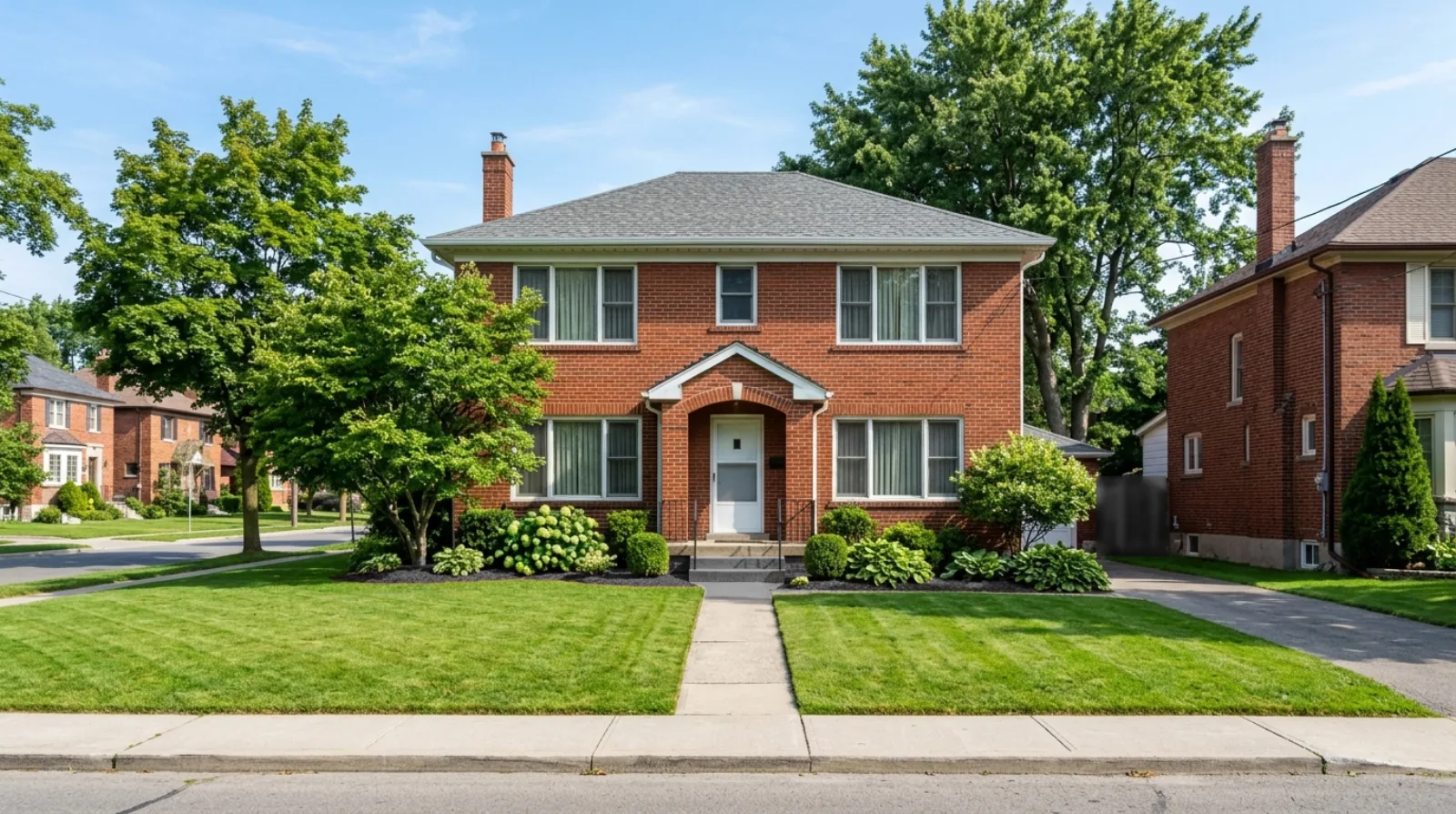
When a parent moves into care or dies, their Toronto house often sits empty while the family decides what to do. Toronto charges a tax on homes left vacant for six months or more in a year, and it applies to estate houses too. Three exemptions can cover the years an estate house sits empty, but each one has to be claimed, and someone has to file a declaration every year.
I'm Anthony Palleschi, a real estate sales representative in Toronto, and I work with owners and builders on lots that could hold more than one home. This post covers one rule, the City's Vacant Home Tax, using the City's Vacant Home Tax page as it read on November 1, 2026 (last changed July 22, 2026). For the estate's legal steps, speak to the estate's lawyer. For selling the house, see how I work with sellers.
The tax in brief
The City's page says the tax applies to "A residential property that was vacant for six months or more during the taxation year." Beginning with the 2024 tax year, the rate is 3 percent of the property's Current Value Assessment, the value the province's assessment agency puts on the property.
As an example of the arithmetic: on a house assessed at $1,200,000, the tax for one year would be $36,000. Two years would be $72,000.
The three exemptions that fit an estate house
| Exemption | When it applies | How long | Proof the City asks for |
|---|---|---|---|
| Principal resident is in care | The principal resident is in a hospital, long term care or supportive care facility for at least six months of the year | Up to two consecutive years | A signed letter from the facility and proof of earlier residence |
| Death of a registered owner | The house was vacant six months or more in the year because an owner died that year or in the two years before | Up to three consecutive tax years | A copy of the death certificate |
| Transfer of legal ownership | The sale closed in the tax year being declared, as a 100 percent transfer | The year of the sale | A copy of the land transfer deed |
Taken in order, these can cover a parent moving into care, then dying, then the estate selling the house. Each exemption has its own conditions, so check each year against the City's page.
A worked timeline
Here is how the rules could line up for one family. The years are an example I chose to show how the exemptions fit together. Each family's dates will differ.
- A parent moves into a long term care home in February 2025, and the house stays empty for the rest of the year. For 2025, the principal resident in care exemption can apply, with a letter from the care home. The declaration is due by April 30, 2026.
- The parent dies in May 2026, and the house stays empty. For 2026, the death of a registered owner exemption can apply, with a copy of the death certificate. The declaration is due by April 30, 2027.
- The estate is settled in 2027, and the house is still empty. The death exemption can apply again for 2027, its second year. The declaration is due by April 30, 2028.
- The estate sells the house, and the sale closes in 2028. For 2028, the death exemption has one year left, and the transfer of ownership exemption also applies, with a copy of the deed. The estate files the declaration by April 30, 2029.
Missing any one of those four declarations would let the City assume the house was vacant that year.
The yearly declaration
In my view, this is the step to put on the calendar first. The City's page says every residential owner must declare the property's occupancy status every year, "even if they live there or qualify for an exemption." The general deadline is April 30. The page says, "If a declaration is not received by the April 30 deadline, the City will assume the property was vacant."
The declaration is made through the City's online portal, using the customer number and either the property address or the 21-digit assessment roll number. The City's vacant home hotline, 416-395-1098, is for reporting vacant properties, and the page asks owners not to use it to declare.
For an estate, decide early who will file. The estate trustee is the person who acts for the estate, and the estate's lawyer can confirm who should sign.
Dates for the 2025 tax year
The City's page gives these dates for the 2025 tax year:
| Step | Date |
|---|---|
| Declaration deadline (general) | April 30, 2026 |
| Vacant Home Tax Notice issued | June 2026 |
| First instalment due | September 15, 2026 |
| Second instalment due | October 15, 2026 |
| Third instalment due | November 16, 2026 |
| Deadline to dispute the 2025 bill | December 31, 2026 |
The page says the 2025 declaration portal is closed. If an estate missed a declaration and received a bill, the dispute process below is the route.
Disputing a bill
You dispute a bill by filing a Notice of Complaint through the online portal. For a 2025 bill, the deadline is December 31, 2026. If you disagree with the decision on the complaint, the page says you can appeal within 90 days of that decision.
Fines
The page says a false declaration, or not providing information the City asks for, "may result in a fine of up to $10,000," plus the tax. Keep a copy of the death certificate, the facility letter or the deed with the estate's records for each year you claim an exemption.
What this means if you plan to sell
This section is my own view.
The death of an owner exemption gives an estate up to three tax years. That is enough time to get legal advice, settle the estate and choose how to sell, as long as the declarations are filed. A sale to a builder, or on the open market, closes the tax question for that year under the transfer exemption.
If the house is on a lot that a builder might want for a multiplex, knowing that early helps the family compare offers within the exemption period. See how I work with sellers for what that review covers.
Questions to ask each year
- Who is filing the Vacant Home Tax declaration for the estate, and by April 30?
- Which exemption applies this year, and do we have the proof?
- How many of the three tax years under the death of an owner exemption are left?
- Will the sale close this year, so the transfer exemption applies?
- Has a bill arrived that needs a Notice of Complaint by its deadline?
If you are handling a parent's house in Toronto and want to talk about selling it, reach me through the contact page or at 416-636-6800.
Planning and development potential is property-specific and subject to zoning, approvals, site conditions, municipal review and other due diligence.
Sources
All pages opened on November 1, 2026 (PT).
- City of Toronto, Vacant Home Tax (date modified July 22, 2026): the definition of a vacant property, the 3 percent rate from 2024, the yearly declaration and April 30 deadline, the online portal, the exemptions for an owner in care, the death of an owner and a transfer of ownership, the 2025 tax dates, the Notice of Complaint and appeal, and fines of up to $10,000.
Frequently asked questions
Does Toronto's Vacant Home Tax apply to an estate house?
Toronto's Vacant Home Tax applies to a residential property that was vacant for six months or more in the tax year, at 3 percent of its Current Value Assessment since the 2024 tax year. An estate house that sits empty can be taxed, unless an exemption such as the death of a registered owner exemption applies and is claimed.
How long does the death of an owner exemption last in Toronto?
The City of Toronto's Vacant Home Tax page says the death of a registered owner exemption can be claimed for up to three consecutive tax years. It applies when the property was vacant for six months or more in the year because an owner died in that year or in one of the two previous years. A copy of the death certificate is required.
Is there a Vacant Home Tax exemption when a parent moves into care?
Yes. The City of Toronto has a principal resident in care exemption for when the principal resident is in a hospital, long term care or supportive care facility for at least six months of the tax year. It needs a signed letter from the facility and proof of earlier residence, and can be claimed for up to two consecutive years.
When is the Vacant Home Tax declaration due in Toronto?
Every residential owner in Toronto must declare the property's occupancy status each year, even when they live there or qualify for an exemption. The general deadline is April 30 of the year after the tax year. If no declaration is received by then, the City says it will assume the property was vacant.
What is the fine for a false Vacant Home Tax declaration in Toronto?
The City of Toronto's Vacant Home Tax page says a false declaration, or failing to provide information the City asks for, may result in a fine of up to $10,000, plus payment of the tax. Keep copies of the documents behind each exemption you claim, such as the death certificate or the facility letter.
When is the 2025 Vacant Home Tax due in Toronto?
The City of Toronto's Vacant Home Tax page says owners subject to the 2025 tax would be issued a Vacant Home Tax Notice in June 2026, with the tax due in three equal instalments on September 15, October 15 and November 16, 2026. The deadline to dispute a 2025 bill is December 31, 2026.
How do I dispute a Vacant Home Tax bill in Toronto?
You dispute a Toronto Vacant Home Tax bill by submitting a Notice of Complaint through the City's online portal. The deadline to dispute a 2025 bill is December 31, 2026. If you disagree with the decision on the complaint, the City's page says you can appeal within 90 days of that decision.
Does selling the estate house end the Vacant Home Tax?
The City of Toronto lists a transfer of legal ownership exemption for the tax year in which a sale closes, when it is a 100 percent transfer. The proof is a copy of the land transfer deed. The estate still files the declaration for that year by the City's deadline, with the deed as proof of the sale.