
Blog / Missing Middle Housing
Toronto's Multiplex Bedroom Limit: How Many Bedrooms a Fourplex Can Have
Written by Anthony Palleschi · October 25, 2026 · 6 min read
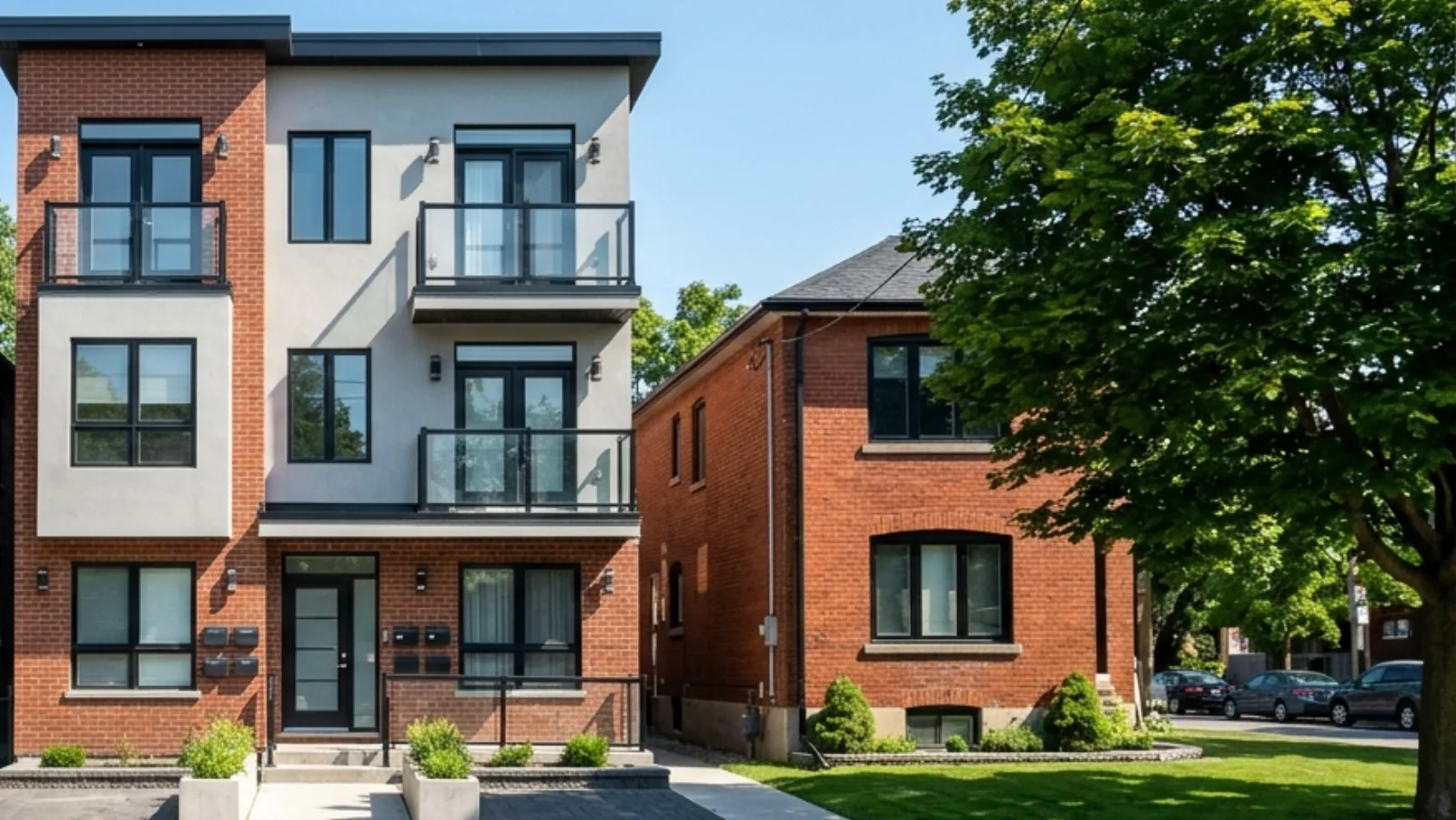
How many bedrooms can a Toronto fourplex have? Since June 2025 the zoning by-law gives an exact answer: 12. The same by-law sets 8 for a duplex and 9 for a triplex. If you are planning a multiplex, or buying a lot to build one, this number changes the unit mix and the rent the building can earn.
I'm Anthony Palleschi, a real estate sales representative in Toronto, and I work with owners and builders on lots like these. This post covers one rule, the bedroom limit in By-law 648-2025, as the by-law read on November 1, 2026. For every other multiplex rule (units, height, depth, setbacks), see the full guide, How many homes fit on a Toronto lot.
What the by-law says
By-law 648-2025 was adopted by City Council on June 25 and 26, 2025 and enacted on June 26, 2025. For the R zone, it reads:
On a lot in the R zone, the maximum number of bedrooms permitted within a detached houseplex or semi-detached houseplex is equal to: (A) four times the number of dwelling units, for a residential building with two dwelling units; or (B) three times the number of dwelling units, for a residential building with three or more dwelling units.
The by-law adds the same rule to the RD, RS, RT and RM zones. In each one, "a bachelor dwelling unit has one bedroom" for the count.
The limit for each building
| Building | Units | Rule | Most bedrooms in the building |
|---|---|---|---|
| Duplex | 2 | 4 times the units | 8 |
| Triplex | 3 | 3 times the units | 9 |
| Fourplex | 4 | 3 times the units | 12 |
The limit is for the whole building. The by-law does not set a number for each unit, so a fourplex can split its 12 bedrooms among its units in different ways, as long as the total stays at 12 or fewer. For example, a fourplex with two three-bedroom units and two two-bedroom units has 10 bedrooms and fits. A fourplex with four three-bedroom units has 12 and also fits.
A bachelor unit counts as one bedroom. A fourplex with one bachelor and three three-bedroom units has 10 bedrooms.
Here is how some common unit mixes compare with the limit. The arithmetic is mine, from the rule above:
| Building | Unit mix | Total bedrooms | Limit | Fits? |
|---|---|---|---|---|
| Duplex | Two four-bedroom units | 8 | 8 | Yes |
| Triplex | Three three-bedroom units | 9 | 9 | Yes |
| Triplex | One four-bedroom and two three-bedroom units | 10 | 9 | No |
| Fourplex | Four three-bedroom units | 12 | 12 | Yes |
| Fourplex | Two four-bedroom and two two-bedroom units | 12 | 12 | Yes |
| Fourplex | One four-bedroom and three three-bedroom units | 13 | 12 | No |
| Fourplex | One bachelor and three three-bedroom units | 10 | 12 | Yes |
A triplex has less room for large units than a duplex once the count is per unit: a duplex can average four bedrooms per unit, and a triplex or fourplex can average three.
What counts as a bedroom
The same by-law added a definition of "bedroom" to the zoning by-law: a room in a dwelling unit "containing a window or alternative source of natural light, primarily used or designed for use for sleeping." It adds that a dwelling room in a multi-tenant house is not a bedroom.
This part is my own view. The definition looks at what a room is used or designed for. A room drawn on the plans as a den or office, with a window, may be read as a bedroom if it is designed for sleeping. Label rooms on your drawings with care, and ask the examiner if a room could be read either way.
Which buildings the limit covers
The limit is written for detached houseplexes and semi-detached houseplexes. By-law 648-2025 defines both:
- A detached houseplex is a building on one lot, not attached to the next lot, with two to four units and at least one unit entirely or partly above another. Duplexes, triplexes and fourplexes that meet these tests are detached houseplexes.
- A semi-detached houseplex is the same idea for each half of a building on two lots, divided by a party wall, with up to four units in each half.
The by-law also says a detached house, semi-detached house or townhouse "that has one or more secondary suites" is not a houseplex. A house with secondary suites is a different building type in the zoning by-law, with its own rules.
In the sixplex areas, By-law 654-2025 expands the definition of a detached houseplex to six units. By my reading, the three-times rule would then allow 15 bedrooms in a fiveplex and 18 in a sixplex. The by-law does not state those totals, so confirm them with Toronto Building before you design around them.
Plans filed before June 26, 2025
The by-law includes transition rules. A building can have more bedrooms than the limit if:
- it is a lawfully existing building and no bedrooms are added after June 26, 2025 that would increase the difference, or
- it is built under a permit issued after June 26, 2025 with no more bedrooms per unit than shown in one of these, applied for on or before June 26, 2025: plans approved with a zoning certificate, an approved zoning by-law amendment, a minor variance, or a site plan approval.
In the second case, no bedrooms may be added later if they would increase the difference.
Why it matters for owners and builders
This section is my own view.
For a builder, the limit sets the most family-sized units a fourplex can hold. Four three-bedroom units use all 12 bedrooms. Four four-bedroom units would need 16, which is over the limit. A plan that counted on larger units needs a new unit mix, or a minor variance.
For an owner selling a lot, the limit is one of the rules a builder uses to work out what a fourplex on your lot could earn, and so what the lot is worth to them. If a builder's offer assumes a unit mix, ask how many bedrooms it counts.
For a buyer of an existing multiplex, the transition rules matter. A building with more bedrooms than the limit may be lawful today, and adding a bedroom later may not be allowed.
Questions to ask about a multiplex plan
- How many bedrooms does the plan show in total, counting each bachelor unit as one?
- Is the building a detached houseplex, a semi-detached houseplex, or a house with secondary suites?
- Could any room labelled as a den or office be read as a bedroom?
- Was any application for the project filed on or before June 26, 2025?
- If the plan needs more bedrooms, does the impact justify a minor variance?
If you are planning a multiplex or selling a lot that could hold one, see how I work with developers and sellers, or reach me through the contact page or at 416-636-6800.
Planning and development potential is property-specific and subject to zoning, approvals, site conditions, municipal review and other due diligence.
Sources
All pages opened on November 1, 2026 (PT).
- City of Toronto, By-law 648-2025, enacted June 26, 2025: the bedroom limit in the R, RD, RS, RT and RM zones, the transition rules, and the definitions of bedroom, detached houseplex and semi-detached houseplex.
- City of Toronto, By-law 654-2025, enacted June 26, 2025: the six-unit detached houseplex in the sixplex areas.
- City of Toronto, Multiplex Housing page: the June 25 and 26, 2025 adoption.
Frequently asked questions
How many bedrooms can a fourplex have in Toronto?
Under By-law 648-2025, a fourplex in Toronto's residential zones can have up to 12 bedrooms in total. The by-law sets the limit at three times the number of dwelling units for a building with three or more units. A bachelor unit counts as one bedroom, so a fourplex with one bachelor unit can have 11 other bedrooms.
How many bedrooms can a duplex have in Toronto?
Under By-law 648-2025, a duplex in Toronto's residential zones can have up to eight bedrooms in total. The by-law sets the limit at four times the number of dwelling units for a building with two units. A bachelor unit counts as one bedroom toward the total. The limit applies to the whole building.
When did Toronto's multiplex bedroom limit start?
Toronto City Council adopted By-law 648-2025 on June 25 and 26, 2025, and it was enacted on June 26, 2025. The bedroom limit is part of that by-law. Buildings that lawfully existed before then, and some projects with applications filed on or before June 26, 2025, can keep more bedrooms under its transition rules.
What counts as a bedroom in Toronto's zoning by-law?
By-law 648-2025 added a definition to Toronto's zoning by-law. A bedroom is a room in a dwelling unit that has a window or another source of natural light and is used, or designed to be used, mainly for sleeping. A dwelling room in a multi-tenant house is not counted as a bedroom under that definition.
Does the bedroom limit apply in every Toronto residential zone?
Yes. By-law 648-2025 adds the same bedroom limit to each of Toronto's residential zones: R, RD, RS, RT and RM. In the RD zone it covers detached houseplexes. In the other four zones it covers both detached houseplexes and semi-detached houseplexes, which are the by-law's names for duplexes, triplexes and fourplexes.
Does the bedroom limit apply to a house with a secondary suite?
Toronto's zoning by-law treats a house with secondary suites as a different building type. By-law 648-2025 says a detached house, semi-detached house or townhouse that has one or more secondary suites is not a detached houseplex or semi-detached houseplex, and the bedroom limit is written for houseplexes. Check your plan's building type with Toronto Building.
Can an existing multiplex keep more bedrooms than the limit?
Yes, in some cases. By-law 648-2025 lets a lawfully existing residential building keep more bedrooms than the limit, as long as no bedrooms are added after June 26, 2025 that would increase the difference. A new building can also keep the bedroom count shown in certain approvals applied for on or before that date.
Can I get a minor variance for more bedrooms in a Toronto fourplex?
The bedroom limit is a regulation in Toronto's zoning by-law. The Committee of Adjustment can grant a minor variance from a zoning regulation when the four tests in the Planning Act are met, so a request for more bedrooms would be judged by those tests. Whether a plan meets them depends on its impact, so ask a planner first.