
Blog / Missing Middle Housing
Toronto Heritage Designation: What It Means for Redevelopment and Lot Value
Written by Anthony Palleschi · November 22, 2026 · 9 min read
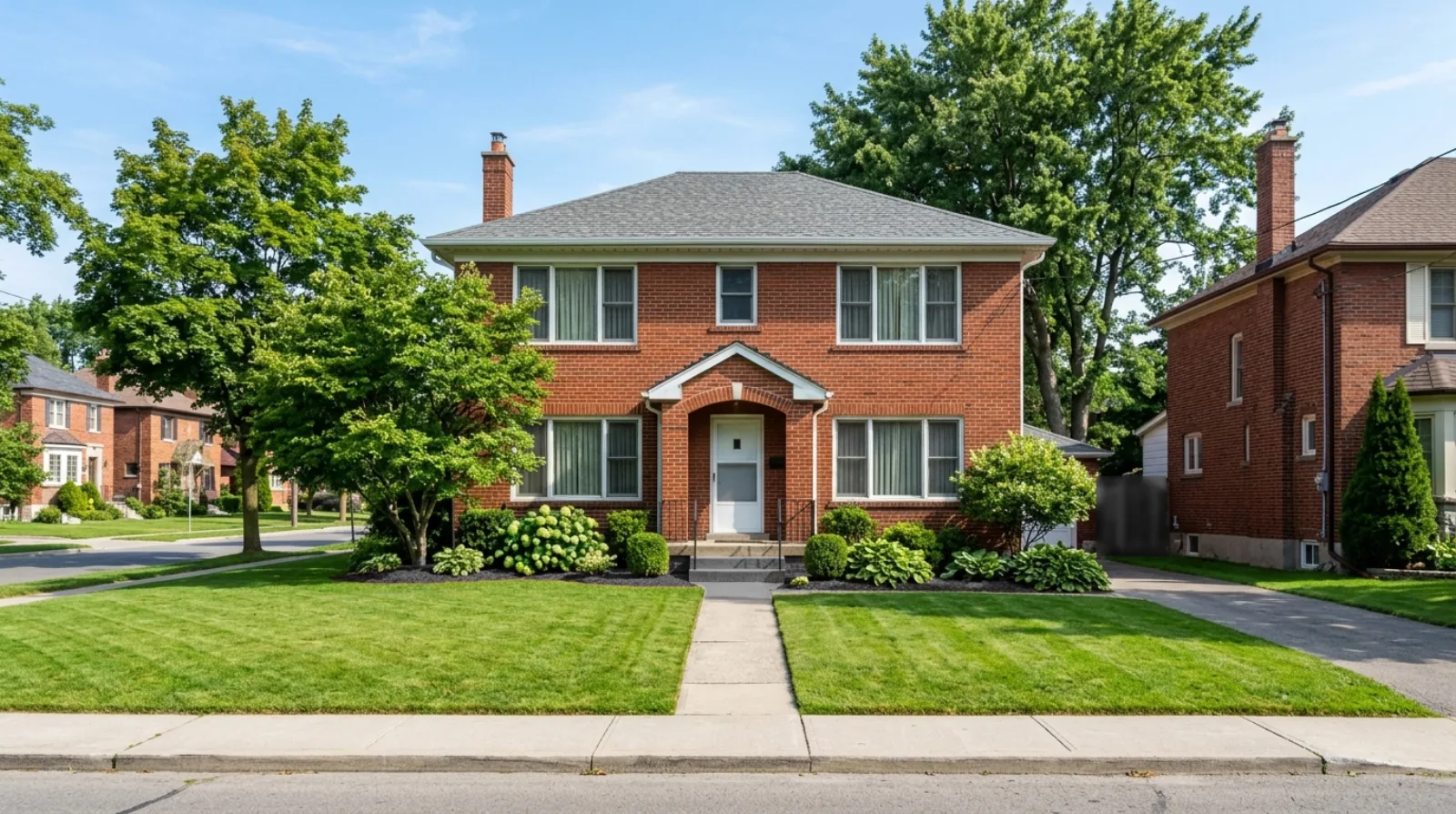
A Toronto property can carry a heritage flag in three ways. Listed on the Heritage Register, designated under Part IV of the Ontario Heritage Act, or inside a Part V Heritage Conservation District. Each one changes what an owner or a builder can do. The 2027 deadline added by Ontario's Bill 23 is about to change the list again. This post sets out what each status means, and what it means for lot value, as the rules read on November 15, 2026.
I'm Anthony Palleschi, a real estate sales representative in Toronto, and I work with owners and builders on lots where a heritage flag is part of the file. For the wider zoning picture, see my guide to Toronto multiplex zoning. For how builders price risk, see how builders price land.
The three statuses
| Status | Legal source | What it does |
|---|---|---|
| Listed | Section 27 of the Ontario Heritage Act | Put on the Heritage Register as of cultural heritage value or interest, with no by-law |
| Part IV designated | Section 29 of the Ontario Heritage Act | Protected by a City by-law that names specific heritage attributes |
| Part V HCD | Section 41 of the Ontario Heritage Act | Inside a district plan that sets heritage rules for the whole area |
All three put the property on the City's Heritage Register. Only the designated property and the HCD property are legally protected.
Listed: a flag without a by-law
A listed property is on the Register as of cultural heritage value or interest. The listing is the City's view, published in the Register, that the property meets one or more of the criteria in Ontario Regulation 9/06. There is no by-law.
What listing does:
- Puts the property on the public Register.
- Gives the City advance notice of any demolition permit, with a 60-day period to decide whether to designate under Part IV.
- Signals to a buyer that the City is watching.
What listing does not do:
- Require Council consent for alterations.
- Protect any specific attribute of the building.
- Prevent a rebuild, once the 60-day notice period has run.
In practice, a listed property with no public attention tends to be redeveloped. A listed property that neighbours or the local Councillor care about tends to be designated under Part IV before the 60 days run.
Part IV designated: protected by a by-law
A Part IV designation is a by-law passed by Council that protects a specific property. The by-law names the heritage attributes, which are the parts of the property that the designation protects. Common attributes:
- The front facade, often brick or stone, with named windows and doors.
- The roof line, with specific slopes and dormers.
- The exterior wall materials and the trim.
- Stained glass windows, where present.
- The chimney and the porch.
The designation by-law does not protect what is not listed. A property with a front facade attribute can be redeveloped behind the facade. A property with a full exterior attribute cannot, without more work.
The owner's rights:
- 30 days to object to a notice of intention to designate.
- Right to seek Council consent to alter or demolish, with a decision in 90 days.
- Right to appeal a refusal to the Ontario Land Tribunal.
Part V Heritage Conservation District
A Heritage Conservation District (HCD) is a defined area that Council designates under section 41 of the Act. Each HCD has a district plan that sets rules for height, massing, materials, additions and demolition within the area. The rules apply to every property in the HCD, whether or not the property is individually listed.
Toronto has over 25 HCDs, including Cabbagetown, the Queen Street West HCD, Fort York and the Yonge-St. Clair HCD. Each one has its own district plan.
Within an HCD, the heritage permit process applies to any alteration that would affect the heritage character of the area. The district plan is the main reference. The by-law for an HCD can be stricter than the base zoning. A lot in an HCD with a height overlay of 12 metres can still be held to 9 metres under the district plan.
The 2027 deadline
Ontario's Bill 23, More Homes Built Faster Act, 2022, amended the Ontario Heritage Act to require municipalities to designate listed properties within two years of listing. For properties listed before January 1, 2023, the deadline is January 1, 2027. A property not designated by that date comes off the Register, and the City cannot re-list it for five years.
Three effects of the deadline:
- Toronto is reviewing every listed property. The City's Heritage Preservation Services is working through the Register and bringing designation by-laws to the Preservation Board and Council.
- Owners of listed properties have until January 1, 2027 to decide. An owner who wants to redevelop without a designation can file a demolition application now, or wait for the status to lapse on the deadline.
- A builder's discount on a listed property may disappear. A listed property that trades at a discount today may lose that discount on January 1, 2027, if the status comes off the Register.
Not every listed property will be designated. Council is prioritizing properties with clear heritage attributes and strong community interest. Properties that were listed years ago on thin research may be removed.
How heritage affects a severance
A severance on a designated lot is possible, but the heritage attributes stay with the land. If the attribute is a front facade and a roof line, those attributes are tied to the part of the land under the facade, and they do not transfer to the other part of the severed lot. A severance can therefore create one lot with the heritage attribute and one lot without. The non-attribute lot can proceed with no heritage permit for the new building.
The usual sequence is:
- Severance application at the Committee of Adjustment.
- Heritage permit application for the attribute lot, once the severance is finalized.
- Building permit for both lots.
This is a longer path than a severance on a non-heritage lot. My post on Toronto consent to sever covers the base process.
How heritage affects a multiplex
A multiplex on a designated lot can proceed when the design keeps the named attributes. The common approach is facade retention: the front facade and the first roof line of the heritage building are kept, and the new multiplex is built behind them. The attribute is the facade. The new building is behind it.
A heritage permit is needed for the alteration. Toronto's Heritage Preservation Services division reviews the design against the attributes listed in the designation by-law. The staff recommendation goes to Council, through the Toronto Preservation Board.
A multiplex on a listed but not designated property is a simpler path. The 60-day notice window is what the builder plans around.
A multiplex inside an HCD is subject to the district plan. The plan can set tighter rules on height, massing and materials than the zoning by-law. A design that fits the zoning can still fail the district plan.
How heritage affects lot value
A heritage designation tends to reduce the land value a builder will pay. The size of the discount depends on the attributes:
- Front facade only. The discount is usually 10 to 20 percent of market, because facade retention is routine.
- Full exterior. The discount is usually 20 to 30 percent, because the builder has to work inside the existing envelope.
- Interior attributes. The discount can be larger, because the design flexibility is further reduced.
A lot in an HCD can trade at a wider range. A lot with a strong attribute in a lively district (Cabbagetown, Bay-Cloverhill) can trade at market because the district itself commands a premium. A lot with a strong attribute in a less demanded area can trade well below.
For the full pricing framework, see how builders price land.
What this means for an owner
A heritage flag is a change of options, not a loss of them. Three cases to think about:
- Listed, not designated. Check whether the property will be designated or removed before January 1, 2027. The answer changes the value.
- Part IV designated. Read the designation by-law and the listed attributes. A facade-retention multiplex is often possible.
- Inside an HCD. Read the district plan. Heights and materials matter more than base zoning.
An owner considering a sale should also consider the timing: a listed property redeveloped before the January 1, 2027 deadline uses the 60-day notice path. The same property after January 1, 2027, if designated, uses the full Council consent path.
Questions to ask about your heritage status
- What does the City's Heritage Register say about my address today?
- If my property is listed, is it on the Preservation Board's agenda for designation?
- If my property is designated, what are the listed attributes?
- Is my property in a Heritage Conservation District, and what does the district plan say?
- How does the January 1, 2027 deadline affect my timing?
If you want to walk through what a heritage flag means for your lot, see how I work with sellers and builders, or reach me through the contact page or at 416-636-6800.
Planning and development potential is property-specific and subject to zoning, approvals, site conditions, municipal review and other due diligence.
Sources
All pages opened on November 15, 2026 (PT).
- City of Toronto, Heritage Register page: the three statuses, the search function and the listing documents.
- City of Toronto, Heritage Preservation Services page: the heritage permit process and the Toronto Preservation Board.
- Government of Ontario, Ontario Heritage Act, R.S.O. 1990, c. O.18: sections 27, 29 and 41 on listing, Part IV designation and Heritage Conservation Districts.
- Government of Ontario, Bill 23, More Homes Built Faster Act, 2022: the two-year deadline for designating listed properties and the January 1, 2027 cutoff for properties listed before January 1, 2023.
Frequently asked questions
How do I check if my Toronto property is on the Heritage Register?
Open the City's Heritage Register search at toronto.ca, type the address, and the result shows whether the property is listed, designated under Part IV of the Ontario Heritage Act, or within a Part V Heritage Conservation District. The register is also searchable by property identification number. The listing or designation document is attached to each entry.
What is the difference between a listed and a designated heritage property in Toronto?
A listed property is on the Heritage Register as being of cultural heritage value or interest, without a by-law protecting it. A designated property is protected by a by-law under Part IV of the Ontario Heritage Act, which requires Council consent to alter or demolish the heritage attributes. Both show up on the register; only the designated one is legally protected.
What is the 2027 deadline for Toronto listed heritage properties?
Ontario's Bill 23, More Homes Built Faster Act, 2022, amended the Ontario Heritage Act to require municipalities to designate listed properties within two years of listing, or to remove them from the Register. For properties listed before January 1, 2023, the deadline is January 1, 2027. A property removed from the Register on that date loses its listed status and cannot be re-listed for five years.
Can I demolish a Toronto heritage designated house?
Not without Council consent. A Part IV designated property or a property in a Part V Heritage Conservation District needs a demolition permit from Toronto Building and the consent of City Council under the Ontario Heritage Act. Council can refuse, approve, or approve with conditions. Replacement with a multiplex is possible on some lots, with conditions.
Does heritage designation stop a multiplex in Toronto?
Not always. A Part IV designation applies to the heritage attributes of the property, which are listed in the designation by-law. A multiplex that keeps the attributes, often the front facade, the roof line and the window pattern, can proceed with a heritage permit. A Part V Heritage Conservation District applies the district plan, which can set stricter rules on height and massing.
How does heritage designation affect lot value in Toronto?
A designation tends to reduce the land value a builder will pay, often by 10 to 30 percent compared to a non-designated lot of the same area in the same block. The size of the discount depends on how restrictive the heritage attributes are. A property with only a front facade attribute may trade near market. A property with a full exterior protection attribute may trade well below.
Can I include heritage attributes in a new multiplex on a Toronto lot?
Yes, and the Heritage Preservation Services division often supports a facade-retention multiplex. The approach is to keep the front facade and the first roof line of the heritage building, and to build the new multiplex behind it. A heritage permit is needed for the work, and the design must respect the attributes listed in the designation by-law.
Can I appeal a heritage designation in Toronto?
Yes. The Ontario Heritage Act gives an owner 30 days to object to a notice of intention to designate. Council must then consider the objection before passing the designation by-law. If Council passes the by-law despite the objection, the owner can appeal to the Ontario Land Tribunal under section 29 of the Act. An HCD designation can be appealed under section 41.