
Blog / Missing Middle Housing
Toronto Minor Variance Process: Every Step From Filing to Decision
Written by Anthony Palleschi · November 16, 2026 · 9 min read
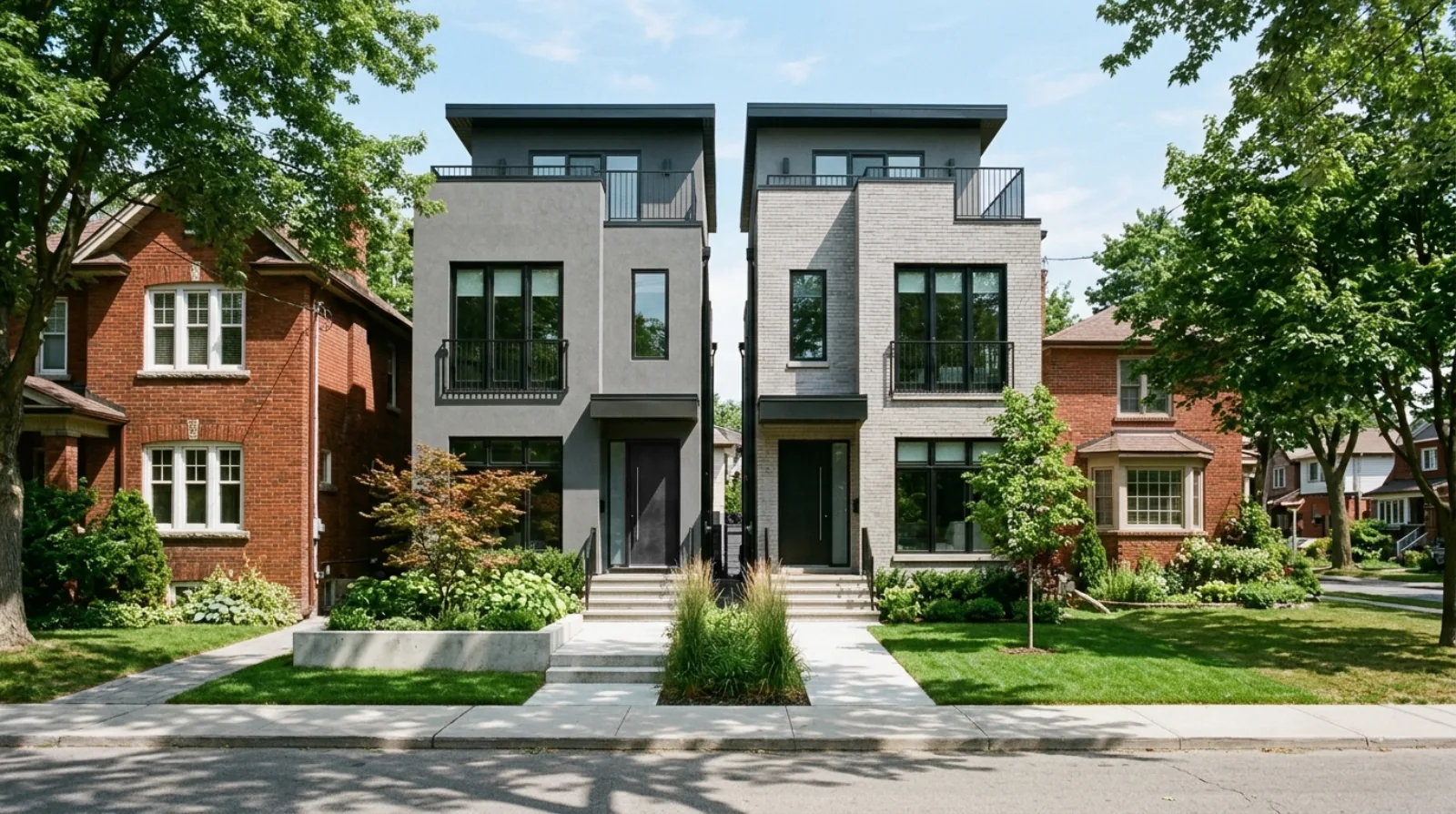
A minor variance is permission for a building to break a zoning rule by a small amount. In Toronto, the Committee of Adjustment hears those requests. Most owners and builders expect a mystery. In practice, the process is a set of five steps, each with a job and a timeline. This post walks through them as they read on November 15, 2026.
I'm Anthony Palleschi, a real estate sales representative in Toronto, and I work with owners and builders on lots that need a variance to reach their full value. For how a variance differs from a lot split, see my post on minor variance versus severance. For what the City charges, see Toronto Committee of Adjustment fees for 2026.
The five steps
| Step | What happens | Typical time |
|---|---|---|
| 1. Zoning review | Toronto Building issues an Applicable Law Statement or notes which rules the design breaks | 2 to 6 weeks |
| 2. Application | The applicant files the form, drawings and fee | Same day once ready |
| 3. Circulation | City staff send the file to planning, forestry, transportation, engineering and other divisions for comments | 6 to 10 weeks |
| 4. Notice and hearing | A sign goes up on the lot, mail goes to neighbours within 60 metres, and the hearing takes place | At least 10 days before the hearing |
| 5. Decision | The Committee approves, approves with conditions, defers or refuses | Same day as the hearing, with the written decision mailed after |
The City's Committee of Adjustment Participation Handbook sets out the roles and the main steps. The four-to-six-month total in my experience lines up with the handbook's expected timing for a file that does not get deferred.
Step 1: Zoning review
Before any variance, Toronto Building reads the plan against the zoning by-law and the applicable overlays. The review produces a list of items that do not comply. Each item becomes a line in the variance application. Common items on a multiplex plan are the number of homes, the height, the floor space index, the setbacks, the lot coverage, the landscaping and the number of parking spaces.
In my view, it is worth asking Toronto Building for the zoning review in writing even when the lot clearly needs a variance. The written list protects the application if City staff ask later why a particular item was not included.
Step 2: Application
The application is a package. The City's forms, submission guidelines and fees page sets out what goes in it:
- Application form with the owner's signature.
- Drawings: a site plan, floor plans and elevations, stamped by an Ontario Association of Architects member or an Ontario Land Surveyor where required.
- A written description of each requested variance, in the words of the by-law.
- The application fee, paid within five business days of the City's letter asking for it.
The fee for 2026 is $2,228.98 for an addition or alteration to a home with three units or less, $5,011.08 for a new home with three units or less, and $6,485.59 for other residential, commercial, industrial or institutional uses. A variance asked for after the work is already built costs double. The full fee list is in my earlier post on Committee of Adjustment fees.
Step 3: Circulation
Once the file is complete and paid, staff circulate it inside the City. The divisions that comment most often on a Missing Middle file are Urban Forestry (tree protection), Transportation Services (access and parking), Engineering and Construction Services (grading and servicing), City Planning (fit with the official plan) and Toronto Fire Services (fire access, mostly on garden and laneway suite files).
Comments can be supportive, neutral, or they can set conditions. They can also recommend refusal. The applicant sees the comments before the hearing and can respond in the written submission or on the day.
Step 4: Notice and hearing
At least 10 days before the hearing, the City mails a Notice of Hearing to every property owner within 60 metres of the subject lot. A notice sign also goes up on the property. The applicant does not deliver these notices. The Committee's staff do.
The hearing is open to the public. The applicant or an agent presents the request, City staff can speak, and neighbours can speak for or against. The members ask questions. The Committee votes the same day.
Step 5: Decision
A decision is one of four:
- Approved. The variance is granted, as asked.
- Approved with conditions. The variance is granted but the plan has to meet named conditions, often about trees, grading or minor design changes.
- Deferred. The Committee asks for a revised plan or more information and returns the file to a later agenda. A fresh notice may be needed if the plan changes materially.
- Refused. The request is turned down.
The written decision is mailed after the hearing. The 20-day appeal window starts on the date of the decision.
The four tests the Committee uses
Section 45(1) of Ontario's Planning Act sets four tests. The requested variance must be:
- Minor, in the sense of the impact on neighbouring lots and on the planning of the area.
- Consistent with the general intent and purpose of the zoning by-law.
- Consistent with the general intent and purpose of the Official Plan.
- Desirable for the appropriate development of the land.
Each test stands on its own. A plan can look minor in height but fail the official plan test if it is in a stable neighbourhood with a different purpose. A plan can fit the by-law's intent but still be out of place on this lot. The Committee weighs all four, and the written decision usually states each one.
Appeals
A refused applicant, or a neighbour who spoke or wrote to the Committee, has 20 days from the date of the decision to file a Notice of Appeal with the Toronto Local Appeal Body. The City's filing an appeal page sets the $300 fee and the Notice of Appeal Form 1. A conditional approval can be appealed too, usually over the conditions.
What changes the timing
A simple file with no conditions and no neighbour concerns can move from zoning review to decision in 10 to 12 weeks. A more complex file, with a deferral, a revised set of drawings or a full appeal, can run past a year. The items that most often add time in my experience are:
- A tree review that asks for revised grading or the loss of a tree the City wants kept.
- A neighbour who files an appeal, moving the file from the Committee to the Local Appeal Body.
- A deferral for more neighbour engagement, often with a redesign between hearings.
- A change in scope mid-process, which can require a new application.
Questions to ask before filing
- Have I received the zoning review in writing from Toronto Building?
- Does my design keep the intent of the zoning by-law, or does it ask for a rewrite in all but name?
- Which City divisions are likely to comment, and have I responded to them in the drawings?
- Who are the neighbours I should speak with before the notice sign goes up?
- Can I accept conditions on approval, or do I need the request as filed?
For a builder, the time cost of a variance is often as important as the fee. My post on how builders price land covers why approval risk shows up in the land price. If your plan needs a lot split as well as a variance, the severance versus minor variance post sets out which one to file first.
What stands between your plan and a variance decision? If you want to walk through it, see how I work with sellers and builders, or reach me through the contact page or at 416-636-6800.
Planning and development potential is property-specific and subject to zoning, approvals, site conditions, municipal review and other due diligence.
Sources
All pages opened on November 15, 2026 (PT).
- City of Toronto, Committee of Adjustment Participation Handbook: the roles, the process, the four Planning Act tests and the expected timing.
- City of Toronto, Committee of Adjustment forms, submission guidelines and fees page: the application package, the 2026 fee lines and the refund rules.
- City of Toronto, filing an appeal page: the 20-day appeal window, the $300 fee and the Notice of Appeal Form 1.
- Government of Ontario, Planning Act, section 45(1): the four tests the Committee of Adjustment applies to a minor variance.
Frequently asked questions
How long does a minor variance take in Toronto?
Toronto's Committee of Adjustment Participation Handbook says an applicant should expect the full process to take 4 to 6 months, from the first zoning review to a final decision. A simple file can move faster. A file that goes back for a revised plan or a deferral can take longer.
What are the four tests for a minor variance in Toronto?
Section 45(1) of the Planning Act sets four tests. The requested variance must be minor, the general intent and purpose of the zoning by-law must be maintained, the general intent and purpose of the official plan must be maintained, and the proposed development must be desirable for the appropriate development of the land. The Committee of Adjustment weighs all four.
Do I need to tell my neighbours about a minor variance in Toronto?
The City of Toronto mails a Notice of Hearing to every property owner within 60 metres of the subject site, at least 10 days before the hearing. The applicant also posts a public notice sign on the property. Nothing requires you to speak with neighbours first, but a conversation often helps the file.
Can I withdraw a minor variance application in Toronto?
Yes. The City may refund 80 percent of the fee if the application is withdrawn before staff circulate it inside the City, and 50 percent if it is withdrawn after that but before the Notice of Hearing is mailed. There is no refund once the Notice of Hearing has been mailed. Refund requests go in writing to the Deputy Secretary-Treasurer.
What happens if a minor variance is refused in Toronto?
The applicant has 20 days from the date of the decision to file a Notice of Appeal with the Toronto Local Appeal Body, under the City's filing an appeal page. The appeal fee is $300. A neighbour who spoke or wrote to the Committee can also appeal within the same 20 days.
Can the Committee defer a decision in Toronto?
Yes. The Committee of Adjustment Participation Handbook says the Committee may defer a decision to allow time for revised drawings, more information from City staff, or further discussion with neighbours. A deferral restarts the notice clock if the revision changes what was proposed, and the file is returned to a later agenda for a fresh hearing.
Does the Committee of Adjustment have to follow City staff advice?
No. City staff comments are one input the Committee weighs. The Committee is made up of citizen members appointed by Council, and it decides each file on the four Planning Act tests. A file can be approved against a staff objection, or refused despite staff support, when the Committee finds that the tests are or are not met.
Can I ask for a minor variance for work that is already built in Toronto?
Yes. Toronto's 2026 fee schedule has a line for a minor variance asked for after the work is built, at double the regular fee. The Committee still applies the four tests. A variance for built work is not a shortcut around the rules, so expect the same scrutiny as for a design that has not been built yet.